World’s largest Vertical Solar Project realized at Frankfort Airport – Based on AquaSolis Foundation Engineering

Englische Flagge

The world’s largest vertical solar project, with a capacity of 17.4 MWp, went into operation at Frankfurt Airport in 2025. AquaSoli supplied the foundation design.

Photovoltaik-Vertikalanlage am Flughafen Frankfurt (Foto: FraPort)

Vertical photovoltaic system at Frankfurt Airport, mounted on foundations designed by AquaSoli (photo: FraPort)

Successful Flagship PV Project at Frankfurt Airport

37,000 vertical solar modules were installed along a 2,800-meter stretch of the airport’s west runway. The new system has a peak output of 17.4 megawatts (MWp) and will supply up to 17.4 million kWh of green electricity annually. AquaSoli carried out the foundation engineering based on pile load tests (POT) and created the load-bearing basis for this major project. The high horizontal loads caused by wind were decisive for the geotechnical design of the supporting structure.

Die neue PV-Anlage befindet sich direkt an der bekannten Startbahn West.

The new PV system is located directly on the west runway of Frankfurt Airport, which is well known throughout Germany (photo: FraPort).

This example impressively demonstrates how AquaSoli is contributing to the energy transition—including in the transportation sector—through its geotechnical expertise and engineering know-how, literally laying the groundwork and foundations for this pioneering PV milestone.

Airport operator Fraport is proud of the new project, which contributes to energy supply and sustainability at the site: With the commissioning of the innovative photovoltaic system on the west runway – consisting of 37,000 vertically arranged modules – up to 17.4 million kilowatt hours of electricity will be produced here annually for the group companies based at Frankfurt Airport. The solar energy generated will primarily be used to power the terminal air conditioning system and supply the growing fleet of electric vehicles.

Together with Kaweh Mansoori, Hessian Minister for Economics, Energy, Transport, Housing, and Rural Areas, Fraport CEO Dr. Stefan Schulte flipped the switch in a transformer station, symbolically putting the entire system into operation. “By 2045 at the latest, Fraport will operate Frankfurt Airport with net-zero status, i.e., greenhouse gas-neutral and CO2-free. The key lever for this is clearly defined: the electricity mix at our home location will consist largely of renewable energies. Today, we have come a good deal closer to this ambitious goal,” said Schulte, emphasizing the central importance of the project in the Fraport Group’s decarbonization strategy.

“Here at the airport, we rely on green electricity from solar power and have also been incorporating smaller wind power quotas into our electricity mix since 2021. As a result, we already achieve a green electricity share of around 90 percent today.” FraPorts Power Purchase Agreement will come into effect in mid-2026. “This means that we have secured 85 megawatts of green power for 2021 and will be able to meet 100 percent of our Group’s energy needs in Frankfurt from renewable resources,” he announced.

Commitment to innovation and progress in Hesse

“Frankfurt Airport is Hesse’s gateway to the world and an important and valuable employer in the region. Today’s commissioning is not only a milestone for the airport’s climate-friendly energy supply, it is also a commitment to innovation and progress in Hesse. As the main shareholder of Fraport AG, the state of Hesse clearly supports the Fraport Group and its sustainability strategy,” Mansoori said.

“Today’s commissioning is a milestone toward our Net Zero climate protection goal. The widespread attention that this innovative plant has attracted around the world also confirms our approach of boldly forging ahead and breaking new ground to lead global air traffic safely into a sustainable future,” Schulte added.

Maintenance and care from our own hands

In 2022, Fraport tested the new technology in a small demonstration plant, tried out maintenance and green space care, and found it to be good. Further expansion began in spring 2024. The construction intervals were based on the breeding and nesting season, taking into account the diverse life in the airport’s biodiverse green spaces. The vertical design of the system ensures that the vegetation below can continue to thrive, as the modules do not block sunlight or precipitation. “These advantages make PV fences attractive not only for our airport, but also for public spaces,” explains Schulte. “Numerous representatives of regional politics, urban planners, and our colleagues from the international airport industry have been able to see this for themselves in recent months. At Frankfurt Airport, there are a variety of expansion options within our rail system that we are already considering,” he announces.

Stability thanks to a combined solution

The new system is not only space-saving and environmentally friendly, but also perfectly complements existing conventional PV systems at the airport. These can be found on roof surfaces and are also being installed on the parking garage and main building of the new Terminal 3. Conventional panels are mounted at an angle and achieve their peak performance at midday, while the collectors on the fence are aligned in an east-west direction and therefore capture sunlight in the morning and afternoon hours. The combination of both technologies thus achieves a stable solar power supply throughout the day.

Group-wide climate protection target: net zero

Further information on the decarbonization of the Fraport Group and the power supply for Frankfurt Airport can be found in the Climate Protection Press Kit. The Fraport Group is committed to achieving net zero status at all fully consolidated locations within Scopes 1 and 2 by 2045 at the latest. This no longer only includes CO2, but all climate-relevant greenhouse gases. Net zero means greenhouse gas neutrality.

(Sources of pictures and text: FraPort, Germany)

Weltweit größtes Vertikal-Solar-Projekt an der Startbahn-West realisiert – Auf AquaSolis Fundamentengineering gegründet

German Flag Das weltweit größte Vertikal-Solar-Projekt mit 17,4 MWp Leistung steht seit 2025 am Flughafen Frankfurt. AquaSoli hat das Fundament-Design geliefert.

Photovoltaik-Vertikalanlage am Flughafen Frankfurt (Foto: FraPort)

Photovoltaik-Vertikalanlage am Flughafen Frankfurt, aufgeständert auf von AquaSoli bemessener Fundamentierung (Foto: FraPort)

Erfolgreiches Leuchtturm-PV-Projekt am Flughafen Frankfurt

An der Startbahn West des Flughafens wurden 37.000 senkrechte Solarmodule auf einer Länge von 2.800 Metern installiert – die neue Anlage erreicht eine Spitzenleistung von 17,4 Megawatt (MWp) und wird jährlich bis zu 17,4 Millionen kWh grünen Strom liefern. Auf Basis von Pfahlprobebelastungen (POT) hat AquaSoli das Fundamentengineering ausgeführt und die tragende Basis für dieses Großprojekt geschaffen. Maßgebend für die geotechnische Bemessung des Tragwerks waren die hohen Horizontallasten aus Windeinwirkung.

Die neue PV-Anlage befindet sich direkt an der bekannten Startbahn West.

Die neue PV-Anlage befindet sich direkt an der deutschlandweit bekannten Startbahn West des Frankfurter Flughafens (Foto: FraPort).

Dieses Beispiel belegt eindrucksvoll, wie AquaSoli durch geotechnische Expertise und Ingenieur-Sachverstand mit zur Energiewende – auch im Verkehrssektor – beiträgt und dabei wortwörtlich mit die Grundlagen und Fundamente für diesen zukunftsweisenden PV-Meilenstein gelegt hat.

Der Flughafenbetreiber Fraport ist stolz auf das neue Projekt, das mit zur Energieversorgung und Nachhaltigkeit am Standort beiträgt: Mit Inbetriebnahme der neuartigen Photovoltaik-Anlage an der Startbahn West – bestehend aus 37.000 senkrecht angeordneten Modulen, werden hier künftig jährlich bis zu 17,4 Millionen Kilowattstunden Strom für die am Flughafen Frankfurt ansässigen Konzerngesellschaften produziert. Die gewonnene Solarenergie fließt vorrangig in die Terminalklimatisierung und versorgt die wachsende E-Fahrzeugflotte.

Gemeinsam mit Kaweh Mansoori, Hessischer Minister für Wirtschaft, Energie, Verkehr, Wohnen und ländlichen Raum, legte Fraport-Vorstandsvorsitzender Dr. Stefan Schulte den Schalthebel in einer Transformatorstation um und nahm damit die Gesamtanlage symbolisch in Betrieb. „Bis spätestens 2045 wird Fraport den Flughafen Frankfurt im Status Net Zero, also treibhausgasneutral und CO2-frei betreiben. Der zentrale Hebel dafür ist klar definiert: Der Strommix unseres Heimatstandorts wird sich weitestgehend aus erneuerbaren Energien zusammensetzen. Diesem ambitionierten Ziel sind wir heute ein gutes Stück nähergekommen“, hebt Schulte die zentrale Bedeutung des Projekts im Zuge der Dekarbonisierungsstrategie des Fraport-Konzerns hervor.

„Hier am Flughafen setzen wir auf Grünstrom aus Solarkraft und binden außerdem bereits seit 2021 kleinere Windstromkontingente in unseren Strommix ein. So erzielen wir heute schon einen Grünstromanteil von etwa 90 Prozent. Ab Mitte 2026 tritt unser Power Purchase Agreement mit EnBW in Kraft. Damit haben wir uns 2021 eine grüne Leistung von 85 Megawatt gesichert und werden unseren Konzern-Bedarf in Frankfurt damit zu 100 Prozent aus erneuerbaren Ressourcen speisen“, kündigt er an.

Bekenntnis zu Innovation und Fortschritt in Hessen

„Der Flughafen Frankfurt ist das Tor Hessens in die Welt und ein wichtiger und wertvoller Arbeitgeber in der Region. Die heutige Inbetriebnahme ist nicht nur ein Meilenstein für die klimafreundliche Energieversorgung des Flughafens, sie ist auch ein Bekenntnis zu Innovation und Fortschritt in Hessen. Als Hauptanteilseigner der Fraport AG steht das Land Hessen klar hinter dem Fraport-Konzern und seiner Nachhaltigkeitsstrategie,“ würdigt Mansoori.

„Die heutige Inbetriebnahme ist ein Meilenstein in Richtung unseres Klimaschutzziels Net Zero. Die breite Aufmerksamkeit, die diese neuartige Anlage in der ganzen Welt auf sich gezogen hat, bestätigt uns auch in unserem Ansatz, mutig voranzugehen und neue Wege zu beschreiten, die den Weltluftverkehr sicher in eine nachhaltige Zukunft führen“, ergänzt Schulte.

Wartung und Pflege aus eigener Hand

2022 hatte Fraport die neue Technologie in einer kleinen Demonstrationsanlage getestet, Wartung und Grünflächenpflege erprobt und für gut befunden. Im Frühjahr 2024 startete der weitere Ausbau. Die Bauintervalle orientierten sich an der Brut- und Setzzeit, die das vielfältige Leben in den biodivers wertvollen Grünflächen des Airports berücksichtigt. Der senkrechte Aufbau des Anlagentyps sorgt dafür, dass die darunterliegende Vegetation weiterhin gut gedeihen kann, da die Module weder Sonnenlicht noch Niederschläge zurückhalten. „Diese Vorteile machen die PV-Zäune nicht nur für unseren Flughafen, sondern auch für den öffentlichen Raum attraktiv“, erklärt Schulte. „Davon haben sich in den vergangenen Monaten zahlreiche Vertreterinnen und Vertreter der regionalen Politik, Städteplanende sowie unsere Kolleginnen und Kollegen aus der internationalen Airport-Branche überzeugen können. Am Flughafen Frankfurt bieten sich innerhalb unseres Bahnsystems vielfältige Erweiterungsmöglichkeiten, über die wir bereits nachdenken“, kündigt er an.

Stabilität dank Kombi-Lösung

Das neue System ist nicht nur platzsparend und umweltschonend, sondern ergänzt auch optimal bereits bestehende konventionelle PV-Anlagen am Airport. Diese sind auf Dachflächen zu finden, werden auch auf dem Parkhaus und Hauptgebäude des neuem Terminal 3 installiert. Konventionelle Panels lagern dabei schräg und erzielen ihre Spitzenleistung in den Mittagsstunden, während die Kollektoren der Zaunanlage in Ost-West-Richtung ausgerichtet sind und daher in den Vor- und Nachmittagsstunden das Sonnenlicht einfangen. So erzielt eine Kombination aus beiden Technologien eine stabile solare Stromversorgung über den ganzen Tag hinweg.

Konzernweites Klimaschutzziel Net Zero

Weitergehende Informationen zur Dekarbonisierung des Fraport-Konzerns und der Stromversorgung für den Flughafen Frankfurt beinhaltet die  Pressemappe Klimaschutz. Bis spätestens 2045 verpflichtet sich der Fraport-Konzern, an allen vollkonsolidierten Standorten innerhalb der Scopes 1 und 2 den Status Net Zero zu erreichen. Unter die Betrachtung fallen nicht mehr nur CO2, sondern alle klimarelevanten Treibhausgase. Net Zero bedeutet Treibhausgasneutralität.

(Bild- und Textquellen: FraPort)

Die Verkehrswende lässt auf sich warten… woran liegt es?

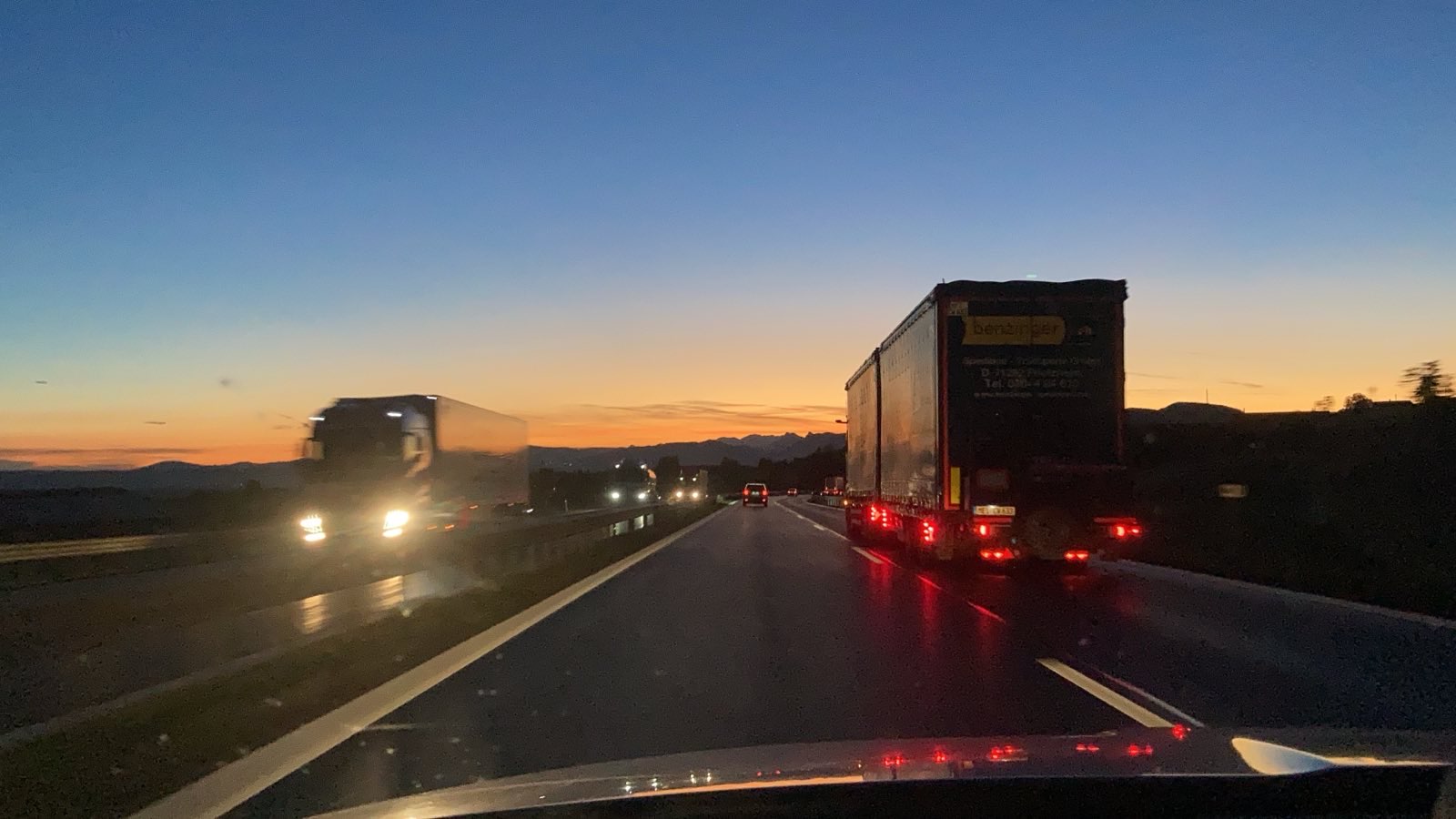
Abendliche Autobahn

Der Verkehrssektor hinkt der Energiewende hinterher…

German Flag Der BR-Journalist Gabriel Wirth berichtet in einer Hybridveranstaltung von den jüngsten Recherchen zu seinem “Leib-und-Magen-Thema”.

Gabriel Wirth

Gabriel Wirth, Bayerischer Rundfunk

Über die Zukunft des Autolandes Deutschland diskutiert Gabriel Wirth mit den Teilnehmern ebenso wie er ganz persönliche Einblicke in sein spannendes Reporterleben gibt. Moderiert wird die Veranstaltung von Dr. Franz Nowak und Dipl.-Ing. Jürgen Schmid, CEO von AquaSoli.

Wann: 10. Dezember, 20:00-21:30 Uhr

Ort: Pfarrsaal Hl. Familie, Am Bienenkorb 5, 81547 München.

Videokonferenzteilnahme möglich unter

https://aquasoli.whereby.com/aquasoli

QR-Code Videokonferenz

https://aquasoli.whereby.com/aquasoli   (Einfach die Handykamera darauf richten.)


Pfahl- und Bodensteifigkeit: Die Auswahl des richtigen Stahlquerschnitts, angepasst an die örtlichen Bodenverhältnisse, als entscheidender Parameter beim Pfahldesign.

German FlagDer Pfahlquerschnitt muss nicht nur zum Montagesystem und den baubetrieblichen Randbedingungen passen. Er muss insbesondere auf die statischen Einwirkungen und die Bodensteifigkeit abgestimmt sein: Die richtige, standortbezogene Auswahl des Pfahlquerschnittes ist somit ein entscheidender Parameter beim Pfahldesign. Letztlich wirken Pfahl- und Bodensteifigkeit im Team zusammen bei der Abtragung der Lasten und bestimmen gemeinsam über Wirtschaftlichkeit, Sicherheit und Langlebigkeit einer Investition in eine Freiflächen-Photovoltaikanlage. Die Bodensteifigkeit wiederum kann nicht aus “Lehrbüchern” abgelesen und auch nicht berechnet werden; Schätzungen wiederum können erheblich von der Realität abweichen, mit negativen Folgen für Wirtschaftlichkeit oder Sicherheit der Pfahlkonstruktion.

Three different pile cross sections (example)

Beispiele dreier verschiedener Rammpfahlquerschnitte

Praktisches Beispiel: Wenn ein Pfahl sich als zu schwach erweist, um die Horizontalkomponente aus Windbelastung aufzunehmen, würde es lediglich Materialkosten vergeuden, aber nicht die Sicherheit der Gründung erhöhen, wenn der Pfahl zwar verlängert würde, aber nicht steif genug wäre, um die Lasten in tiefere, festere Bodenschichten zu übertragen… In diesem Fall kann es stattdessen zielführend sein, ohne Erhöhung der Pfahltiefe auszukommen und stattdessen einen steiferen Pfahlquerschnitt zu wählen, um sowohl die Pfahlstandsicherheit als auch den Materialverbrauch zu optimieren und so technische wie auch wirtschaftliche Belange des Pfahldesigns ins Lot zu bringen und somit Ingenieure wie auch Betriebswirte gleichermaßen zufrieden zu stellen.

Pfahlsteifigkeit, Länge und Steifigkeit des Untergrundes: Anschauliches Modell zur Erklärung der Wechselwirkung zwischen diesen drei Parametern

Pfahlsteifigkeit, Pfahllänge und Steifigkeit des Untergrundes: Anschauliches Modell zur Erklärung der Wechselwirkung zwischen diesen drei Parametern

In dem oben abgebildeten Modell stellen die beiden Metallstäbe links und rechts jeweils Pfähle mit unterschiedlicher Steifigkeit dar; dies können in der Realität Rammpfähle oder aber auch z.B. Schraubpfähle mit umlaufendem Gewinde oder Helix am Pfahlfuß sein. Im Bildquadrant links unten ist ein “fabrikneu” im Boden eingebrachter relativ steifer Pfahl im horizontal ausgelenkten Zustand zu sehen. Die Abbildung im Quadranten unten rechts wiederum zeigt im direkten Vergleich, dass bei einem zu dünnen Pfahlquerschnitt, d. h. bei unzureichend dimensionierter Biegesteifigkeit oder korrosionsbedingter Schwächung, die seitliche Verformung – bei identischer horizontaler Belastung – drastisch zunehmen kann. Dies kann beispielsweise dann zu einem Problem werden, wenn Pfähle mit unterschiedlicher Steifigkeit abwechselnd innerhalb der Konstruktion als stützende Elemente auftreten: Befinden sich Fundamente mit unterschiedlicher Steifigkeit unter einem Solartisch, kann dies sogar zu einem Reißverschlusseffekt mit Überlastung der steiferen Fundamente führen, die bei aufgezwungener Verformung mehr als die ihnen zugedachten Lasten übernehmen müssen. Die steiferen Pfähle müssen nämlich dann für die weicheren Nachbarpfähle “einspringen” und können in der Folge – trotz der als vergleichsweise hoch anzusehenden Tragfähigkeit – unplanmäßig überlastet werden; weiterhin kann es bei periodischer Lastumkehr auch zu einem geometrischen Spiel bzw. Spalt zwischen Boden und Pfahl kommen und in der Folge zu einem Wechsel von statischer zu dynamischer Belastung unter Windeinwirkung, insbesondere auch wenn die Korrosion bei zusammengesetzten Pfahlquerschnitten in den Koppelelementen auftritt und eine kinematische Kette an Pfahlabschnitten entsteht. Die restliche Tragkraft wird hiermit dann wiederum entscheidend von der Steifigkeit des seitlich am Pfahl anliegenden Bodens mit bestimmt.
Genau aus den hier ausgeführten Gründen untersucht AquaSoli direkt vor Ort am geplanten Standort eines Projektes mittels Pfahlprobebelastungen präzise die Biegesteifigkeit des Pfahl-Boden-Gründungstragystemes und ermittelt zusätzlich auch die Korrosivität des Bodens, damit die Planer einer Photovoltaik-Freiflächenanlage einer unzulässigen Gefährdung von Tragsicherheit und Gebrauchstauglichkeit der Fundamente durch entsprechende Korrosionsschutzmaßnahmen begegnen zu können.

Pile and Soil Stiffness in Solar Plant Foundations: Why Load Tests Matter


engWhen designing foundations for solar farms, it is vital to consider both pile stiffness and soil stiffness; neither should be ignored. While pile stiffness is usually estimable with reasonable accuracy, soil stiffness is far more challenging to measure precisely. These uncertainties can impact both safety and reliability. That is why pile load tests (POT) are essential: they verify design assumptions, enhance safety,                                          and help keep project costs in check.

Why Pile and Soil Stiffness Are Critical in Solar Plant Foundation Design

Insufficiently embedded piles (too short piles) may fail to withstand lateral loads, such as those generated by wind, leading to structural failure and increased project costs. Simply increasing pile length is not always effective. If the pile lacks stiffness, loads won’t be appropriately transferred to the deeper, more stable soil layers.

In many cases, selecting a stiffer pile cross-section is a more efficient strategy. Greater stiffness allows for reduced embedment depth while still providing the required load-bearing capacity.

Three different pile cross sections (example)

   Three Example Pile Cross-Sections


Stiff vs. Flexible Piles

Consider two rods representing piles of different stiffness levels. These could be either driven or screw pile foundations:

Pfahlsteifigkeit, Länge und Steifigkeit des Untergrundes: Anschauliches Modell zur Erklärung der Wechselwirkung zwischen diesen drei Parametern

Pile Stiffness, Length, and Subgrade Modulus: Illustrating the Interaction Between Key Design Parameters

  • Left rod: This represents a new foundation with enough stiffness. It handles horizontal loads well.
  • Right rod: This one is thinner or maybe corroded, so it’s less rigid. It bends a lot more under the same load.

This variation becomes especially problematic in solar table foundations when piles with unequal stiffness are installed in sequence. The result is a “zipper effect,” where stiffer piles are overloaded due to uneven load transfer.

Risks of Incorrect Pile Foundation Design
  • Structural failure due to inadequate lateral resistance.
  • Material wastage when pile tips extend into soil layers that do not contribute to load capacity.
  • Increased costs from over-dimensioning without addressing stiffness.
  • Dynamic effects during load reversal scenarios, particularly for screw foundations, where corrosion at joints increases slack and decreases stiffness.

These issues highlight the importance of precise pile-soil interaction analysis for reliable solar plant foundations.

AquaSoli’s Approach: Reliable Data for Safer Designs

At AquaSoli, we carry out pile load tests to accurately assess the bending stiffness of the pile-soil system. To ensure long-term durability, we also perform:

  • On-site soil sampling
  • Laboratory analyses of soil corrosiveness
  • Risk assessments for pile corrosion

This comprehensive approach provides reliable data that results in safer designs, optimised material use, and long-term performance.

Building Stronger Solar Plant Foundations

By optimising pile selection based on pile stiffness and pile-soil interaction, engineers can balance safety, efficiency, and cost-effectiveness. This ensures reliable performance while minimising material use; meeting the needs of engineers, project managers, and stakeholders alike.

Contact AquaSoli today to learn how we can optimise your foundation design and ensure the long-term reliability of your solar project.AquaSoli


Meet our AquaSoli Team in San Diego – at the InterSolar North America!

Meet AquaSoli at InterSolar North America

AquaSoli’s Engineering Team runs for you at InterSolar Trade Show …

Meet us at Intersolar in SAN DIEGO

25th – 27Th of FEBRUARY 2025

Sd_CS_inclined

Aengre you ready to meet AquaSoli at InterSolar (25th to 27th of February) in San Diego? If you decide quickly, please contact our secretariat: Mrs. Rumi Shirahama will be happy to schedule an appointment with you and  our sales team: rumi.shirahama@aquasoli.com.

deutschMöchten Sie AquaSoli auf der InterSolar (25.10.-27.02.2025) in San Diego zu treffen? Bitte kontaktieren Sie unser Sekretariat: Frau Rumi Shirahama vereinbart gerne mit Ihnen und unserem Sales Team einen Termin: rumi.shirahama@aquasoli.com.

AquaSoli Consulting Services – Our expertise explained in brief (Part 3 of 3)

eng

Site Survey

AquaSoli provides site surveys in any phase of your project.

We can visit potential land and carry out a feasibility study before planning and construction starts. During construction we can supervise the construction process.

For commissioning we can support you with the final inspection and we also offer regular inspections throughout the lifespan of your PV-plant.


Review of existing Design

It is often helpful to get a second expert opinion about the quality of design documents. With our know-how and experience we can analyze and assess existing design documents.

We can indentify opportunites for improvement and optimize the design.

AquaSoli Geotechnical Services – Our expertise explained in brief (Part 2 of 3)

eng

Load Tests

According to all technical rules and standards for pile foundations the most efficient investigation for the foundation design is load tests on site with the projected piles.


The piles are installed on site whereas the duration of installation can be measured. Installation difficulties or obstructions are identified.

After installation, load tests are performed in axial compression, axial tension and horizontal direction. The resistances of the piles are measured directly and the foundation design can be done.

Geological & Geotechnical Survey

With the evaluation of direct outcrops (drillings or excavated pits), indirect methods (dynamic probing or SWS Test) on site with the corresponding laboratory work the building ground parameters can be determined.

Soilmechanical Laboratory

Soilmechanical Laboratory

Corrosion Analysis

The evaluation of the Corrosion potential of soil has become a very important part of foundation design. The corrosivity depends on the chemical and physical parameters of the soil. AquaSoli performs the necessary analyses and determines the aggressiveness of the soil towards steel and concrete.

AquaSoli Planning Services – Our expertise explained in brief (Part 1 of 3)

eng

Preliminary Layout: Fast and economic

In the first step, it is often necessary to get an impression of a potential new project. A decision has to be made on whether it is worth pursuing the project further or not.

In this step it is required to keep the efforts and costs as small as possible. Therefore we provide preliminary module layouts based on (public) available terrain data.

This preliminary layout can be done for a low budget, but is already detailed enough for estimating the quality of a potential PV-plant and executing a cost-benefit analysis.


Detailed 3D Layout Plan

Planning PV-parks, including all necessary parameters is a very complex process. The optimal design is affected by:


  • Table Configuration
    • Module type
    • Arrangement of modules
    • Inclination of modules
    • Single post or double post system
    • Fixed tilt system or tracker
    • Azimuth
  • Sun Angle which depends on
    • Geographic position
    • Date
    • Time
  • Tolerable grade of row-to-row shading
  • Presence of shading objects
  • Topography
  • Electrical parameters like
    • String length
    • Inverter size and location
    • Transformer size and location
    • Cable trenches
  • Clearance parameters, necessary for construction and maintenance
    • Minimum row-to-row distance
    • Construction and Maintenance roads


All these parameters are considered in our layouts. AquaSoli’s planning team comprises electrical, civil and environmental engineers.

Equipped with a wide range of tools and applications and a great knowhow our team performs complete shading simulations to adjust the layout and find the optimal solution and to reach the target defined together with the client.


Digital Terrain Model

The digital terrain model (DTM), together with the geographic location is the basis for our layout planning.

For final layout planning, an exact digital terrain model is required in order to display the terrain conditions as detailed as possible. The surface of the terrain is scanned on site by a geodetic survey.

Common approaches for geodetic site surveys include:

  • GPS measurement
  • Photogrammetric drone survey

Both services are provided by AquaSoli. Based on data collected by a geodetic survey, a digital terrain model is created and analyzed with regard to slopes and directions. The DTM is used for detailed layout planning in 3D CAD software.

Digital_Terrain_Model

Digital Terrain Model


If the shape of the terrain does not fulfill the requirements for a beneficial PV-plant, we also offer grading plans for adjusting the terrain by cut-and fill works.


Grading Plan

A flat or smoothly south sloped terrain is the most suitable for construction and efficiency of a PV-plant.

The available land for solar often cannot meet these requirements. In order to prevent a complicated construction phase and an ineffective PV plant caused by big distances between the rows or big losses by shading, it is often the best solution to adjust the land according to the requirements.

The execution of the grading plans is carried out by AquaSoli according to the requirements of clients and authorities. Aquasoli uses 3D CAD Software to plan the optimal Cut-and Fill Design based on a digital terrain model. Cut- and fill volumes are determined with high accuracy.


Cut & Fill Plan

Cut & Fill Plan

Drainage Design

A working drainage system is recommended for all PV plants – especially for graded terrain. AquaSoli performs the design of this drainage system, consisting of drainage channels and ponds. The layout and dimensioning of drainage channels and ponds are based on the digital terrain model. Requirements of clients and authorities and rain fall data are considered.


Construction- and Maintenance-Roads

In order to ensure a smooth construction phase, a working infrastructure with roads and storage areas is required. Also after finishing construction maintenance-roads are necessary.

Depending on the soil conditions and the intensity of traffic, AquaSoli designs the structure of the maintenance- and construction-roads and storage areas.

Erosion Protection

Heavy rainfall can cause erosion of the surface. To prevent expensive improvements of erosion and resulting damages of structures, AquaSoli performs the design of erosion protection considering the slope of terrain, soil conditions and rainfall intensity.


Electrical layout and String Plan

Positioning of electrical components like combiner boxes, inverter, and transformer, as well as planning the string configuration is carried out by AquaSoli.

We consider in our electrical planning economical and technical aspects and have the target to save cable length and reduce cable losses.

Cable Trench Design

Based on the electrical layout and string plan we can arrange the cable trench layout as well as the arrangement of cables within the trenches and the resulting size of the trenches.

We provide the cable trench layout and cross-sections of cable trenches.

Single Line Diagram

Single-line diagrams, which represent the electrical hierarchy of DC- and AC-rated power systems in PV plants, are a key output in the electrical planning phase. AquaSoli prepares a single-line diagram showing the proper power distribution path from the incoming power source to each sub-component, and includes the rate and size of all electrical equipment, their circuit conductors and protective devices.


Stake Out Plan

After layout planning has been completed and before construction can start, it is necessary to mark the positions of arrays, stations, fences, roads and other construction elements on site.

Therefore, we provide stake out plans for marking the locations of specific points like pile’s locations or corners of stations.

Stake Out Plan

Stake Out Plan

Staking Out

Staking out of specific positions on site is supplied by AquaSoli.

With GPS surveying device, we can mark all necessary locations on-site according to the layout and stake-out plan with an accuracy of a few cm.

Staking our via terrestrial GPS

Staking out via terrestrial GPS